

Apple AirPods 4 Review: Everyday Convenience with Smarter Audio
Introduction
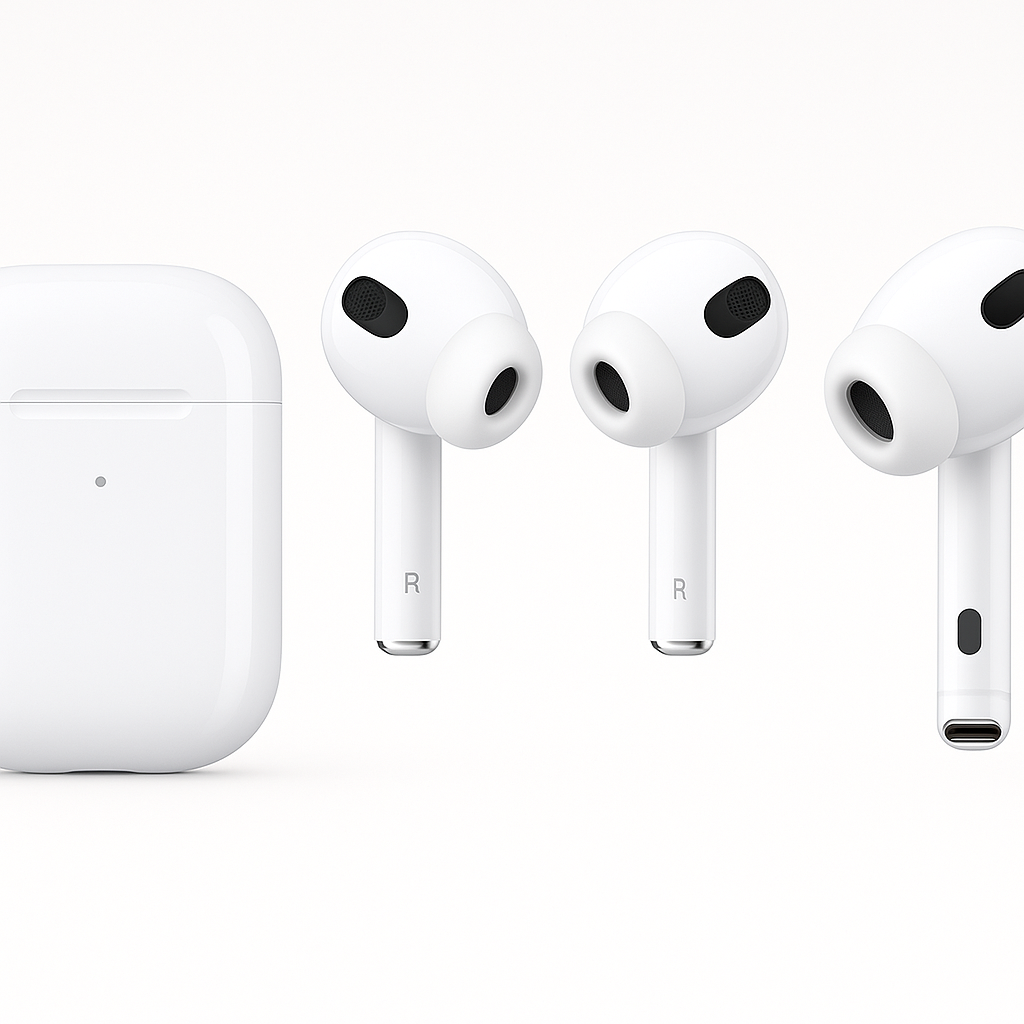
The Apple AirPods 4 Wireless Earbuds are positioned as Apple’s mainstream, do‑everything true wireless option for iPhone users. They combine Bluetooth connectivity, Personalized Spatial Audio, a USB‑C charging case, and Apple’s H2 chip for improved efficiency and audio processing, with a total advertised battery life of up to 30 hours when you include the charging case.
On retailers like Amazon, the AirPods 4 typically sit around the $99.00 mark, placing them in the upper mid‑range of the true wireless market rather than at the very top end. They are built to handle daily life with a sweat‑ and water‑resistant design, quick pairing, and tight integration with iOS features such as automatic device switching and Find My.
This review focuses on how well they serve as an everyday pair of earbuds across different real‑world scenarios, rather than on lab measurements alone.
Typical Use Cases
1. Everyday Commuting and Casual Listening
- Listening to music, podcasts, and audiobooks on buses, trains, or walks.
- Quickly popping one earbud in for short trips or errands.
- Using spatial audio for a more immersive feel with compatible content.
2. Work, Study, and Remote Meetings
- Joining video calls from a Mac, iPad, or iPhone.
- Listening to focus music while working or studying.
- Seamlessly switching between devices signed in to the same Apple ID.
3. Fitness and Outdoor Activities
- Running, gym sessions, and general workouts.
- Walking or cycling in light rain or sweating heavily during exercise.
- Using Siri for hands‑free control while moving.
4. Entertainment and Media Consumption
- Watching movies and shows on iPhone, iPad, or Mac.
- Gaming on Apple devices with low‑latency audio.
- Using Personalized Spatial Audio for Dolby Atmos content in Apple Music or streaming apps that support it.
5. Calls and Voice Notes
- Daily phone calls and FaceTime audio/video.
- Dictating messages or notes with Siri.
- Short, frequent call pick‑ups during the day.
Performance in Each Scenario
Commuting and Casual Listening
For daily commuting, the AirPods 4 lean heavily on the H2 chip and Apple’s tuning. The sound signature favors a clean, consumer‑friendly profile: slightly elevated bass and treble with clear vocals. While not as analytical as studio‑grade IEMs, they deliver a pleasant, non‑fatiguing sound that suits mainstream music, podcasts, and audiobooks.
Personalized Spatial Audio can meaningfully improve the experience with compatible content by creating a wider soundstage and a more immersive sense of space. For standard stereo content, the effect is subtler but can still make music and podcasts feel less confined to the center of your head.
Noise isolation is primarily passive; there is no indication that this model introduces high‑end adaptive ANC comparable to AirPods Pro. On busy trains or planes, you will still hear a fair amount of low‑frequency rumble, though mid‑ and high‑frequency chatter is reduced by the in‑ear seal. For many users, this passive isolation is acceptable for safety and awareness, but it is not targeted at frequent flyers seeking maximum quiet.
Work, Study, and Remote Meetings
In a work or study environment, the AirPods 4 play to Apple’s ecosystem strengths. Pairing is virtually instantaneous with an iPhone: open the case near your device, tap to connect, and you’re done. Once paired, iCloud syncing makes them appear on your iPad and Mac automatically.
For calls and video meetings:
- Voices come through clearly, aided by the H2 chip’s audio processing.
- Microphone quality is solid for typical office and home use. Callers usually hear you clearly in quiet indoor environments.
- Background noise filtering is competent but not as aggressive as some over‑ear headsets specifically designed for noisy open offices.
Automatic device switching is handy when you are hopping between Mac, iPad, and iPhone, though users who frequently change sources might still prefer manually selecting the output device for more predictability.
Battery life in this scenario is a strength. You can reasonably expect multiple long calls and a day’s worth of intermittent listening, topping up from the case as needed.
Fitness and Outdoor Activities
With sweat and water resistance, the AirPods 4 are designed to withstand workouts and light rain. They are not intended for swimming or heavy water exposure, but for running, gym sessions, and everyday use in variable weather, they hold up well.
Fit is stable for most ears, especially if you choose the right eartip size (where applicable). The earbuds are light enough that they do not feel intrusive during longer runs.
For outdoor workouts:
- The open‑ish isolation profile means you retain some awareness of traffic and surroundings, which can be an advantage for safety.
- Physical controls (tap or press gestures, depending on implementation) allow you to play/pause or skip tracks without pulling out your phone.
- Siri voice commands are convenient for adjusting volume, starting specific playlists, or sending quick messages while on the move.
Battery life again is sufficient for even long workouts. A quick top‑up in the USB‑C case before heading out can prevent range anxiety.
Entertainment and Media Consumption
The AirPods 4 show some of their strongest traits with video and gaming on Apple devices:
- Low latency: When used with iOS, iPadOS, and macOS devices, latency is well‑controlled, meaning audio stays closely in sync with video.
- Personalized Spatial Audio: With supported titles on Apple TV+, Apple Music (Dolby Atmos tracks), and other apps, spatial audio adds height and depth to the soundstage. Head‑tracking can make the experience feel more like listening to a small home theater system instead of simple stereo earbuds.
- Comfort: Light weight and smooth contours make them comfortable for long movie sessions.
For serious competitive gaming, wired or specialized low‑latency headsets can still have an edge, but for casual console or mobile gaming, the AirPods 4 are more than adequate.
Calls and Voice Notes
On calls, the AirPods 4 deliver reliable performance:
- Voices are rendered clearly in your ears, with enough midrange presence to keep conversations intelligible, even at low volume.
- Microphone pickup is good enough that callers generally won’t suspect you’re on wireless earbuds.
- Wind and extreme background noise can still pose challenges, as with most compact TWS buds, but for day‑to‑day use they handle typical indoor and mild outdoor conditions well.
The ability to invoke Siri quickly also helps with dictating short messages, notes, and reminders hands‑free.
Strengths Across Scenarios
-
Seamless iOS Integration
The biggest advantage of the AirPods 4 remains how well they work with Apple devices. Fast pairing, automatic device recognition, and deep hooks into iOS, macOS, and iPadOS features make them feel like a natural extension of an iPhone. -
Personalized Spatial Audio
Personalized Spatial Audio, calibrated using your iOS device, can significantly improve immersion for supported media. It makes movies, shows, and music with Atmos mixes notably more engaging than basic stereo. -
H2 Chip Efficiency and Stability
The H2 chip improves wireless stability and power efficiency. In practice, that means fewer dropouts, swift reconnections after removing the earbuds from the case, and consistent performance throughout the day. -
Long Total Battery Life
Up to 30 hours of total listening time with the USB‑C charging case is competitive in this class. Quick top‑ups from the case make it difficult to fully drain the earbuds during normal daily use. -
Comfort and Portability
The classic AirPods design language continues: a compact case that slips easily into a pocket and light earbuds that remain comfortable for extended listening sessions. -
Sweat and Water Resistance
The sweat‑ and water‑resistant rating gives peace of mind for workouts and occasional rain, broadening where and how you can safely use them. -
USB‑C Charging Case
Moving to USB‑C simplifies charging if you already own recent Apple devices or other modern electronics. Fewer cable types are needed in your bag.
Limitations Across Scenarios
-
Best Experience Tied to Apple Ecosystem
While they function as standard Bluetooth earbuds with non‑Apple devices, many headline features—fast pairing, automatic switching, Personalized Spatial Audio setup, and deep Siri integration—are designed specifically for Apple platforms. Android or Windows users will not get the full value. -
Noise Isolation vs. Pro Models
Without advanced adaptive noise cancellation at the level of AirPods Pro, these are not ideal for frequent flyers or users who need maximum isolation in loud environments. -
Limited EQ Customization
Sound tuning is largely fixed around Apple’s preferred curve, with only basic adjustments via system‑level settings. Audio enthusiasts who enjoy fine‑grained EQ might find this restrictive compared to some competitors’ apps. -
Price vs. Feature Balance
At around $99.00, the AirPods 4 command a premium over many competing true wireless earbuds that offer features such as stronger ANC or more extensive app control. The pricing is easier to justify if you value ecosystem integration and spatial audio; if not, alternatives may offer better spec‑for‑dollar value. -
Battery Aging Over Time
As with all small lithium‑ion batteries, long‑term capacity degradation is inevitable. The integrated design means replacing the battery is not practical, so users should view them as a multi‑year, but not decade‑long, investment.
Verdict
The Apple AirPods 4 Wireless Earbuds are best understood as Apple’s mainstream, everyday earbuds optimized for iPhone users, rather than as the most feature‑packed or audio‑tweaker‑friendly option on the market.
They excel at:
- Delivering a clean, enjoyable sound signature suitable for most music and spoken content.
- Offering long total battery life with the USB‑C charging case.
- Providing an especially polished experience with Personalized Spatial Audio and tight integration across Apple devices.
- Surviving workouts and daily commutes thanks to sweat and water resistance.
Their main drawbacks are:
- Limited benefit if you are not deeply invested in the Apple ecosystem.
- Less effective noise isolation compared to models with high‑end ANC.
- A price point around $99.00 that can be undercut by competitors with more aggressive feature lists on paper.
If you primarily use an iPhone (and possibly a Mac or iPad), value convenience and reliability over exhaustive customization, and want an all‑rounder that handles commuting, work, workouts, and entertainment with minimal fuss, the Apple AirPods 4 are a strong and sensible choice. Users seeking maximum noise cancellation, heavily customizable sound, or cross‑platform parity, however, may want to compare them with specialized alternatives before committing.