

Apple AirPods 4 (USB‑C, H2 Chip) Review: Everyday Wireless Earbuds with Smarter Sound
Overview
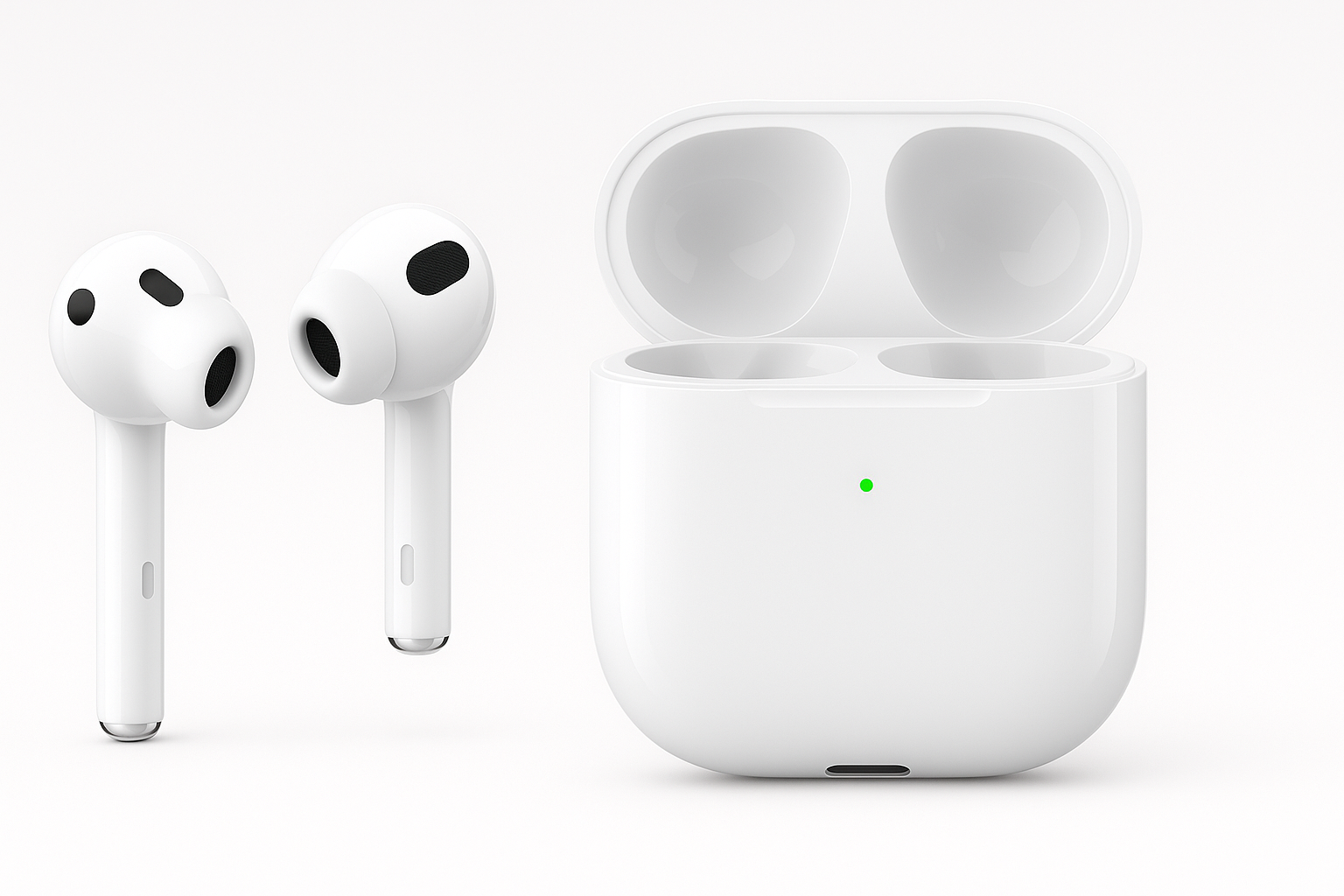
The Apple AirPods 4 are Apple’s latest generation of everyday wireless earbuds, designed as a comfortable, all‑day option for iPhone users who want seamless connectivity, improved sound, and modern conveniences like spatial audio and USB‑C charging. They retain the familiar AirPods look but introduce a refined contour, shorter stem, and updated controls, backed by Apple’s H2 chip and a charging case that supports up to 30 hours of total listening time.
Positioned squarely in the middle of Apple’s audio lineup, this particular configuration of AirPods 4 does not include active noise cancellation (ANC). Instead, it focuses on improved comfort, call quality, and spatial audio features, making it a strong candidate for commuting, office work, and casual listening rather than long flights or consistently noisy environments.
Pricing is in line with Apple’s previous mainstream AirPods releases, with the model typically selling around $99.00 depending on retailer promotions and regional availability.
Standout Features
Redesigned fit for all‑day comfort
Apple has reworked the shape of the AirPods 4 with a smoother contour and shorter stem. The goal is to improve stability in the ear without relying on silicone tips (on this non‑ANC variant), which many users find more comfortable for extended wear. The shorter stem also makes the earbuds feel less obtrusive and reduces the chance of snagging on clothing or accessories.
H2 chip and personalized spatial audio
At the heart of AirPods 4 is Apple’s H2 chip, which enables more advanced audio processing and tighter integration with Apple devices. When paired with compatible iPhones and iPads, the earbuds support personalized spatial audio, which uses device‑based measurements of your ears to tune surround effects for movies, TV, and supported music tracks.
The chip also powers features like dynamic head tracking (when supported by the source), improved latency for games and calls, and smarter handling of Bluetooth connections when you move between Apple devices signed into the same iCloud account.
USB‑C charging case
The move to a USB‑C charging case simplifies life for users already carrying USB‑C cables for modern iPhones, iPads, and MacBooks. The case retains the compact, pocketable design AirPods are known for while offering multiple additional charges for the earbuds. LED indicators provide quick feedback on charging and pairing status.
Sweat and water resistance
AirPods 4 are rated as sweat and water resistant, making them suitable for workouts, light runs, and everyday use in variable weather. While they are not designed for swimming or heavy submersion, this added durability is a welcome improvement for users who rely on AirPods for gym sessions and outdoor activities.
Supporting Features
Voice isolation and improved call quality
Apple highlights voice isolation enhancements, which work with the H2 chip and microphone array to prioritize your voice in calls and reduce background noise. This is especially useful in busy coffee shops, shared offices, or on city streets, where older earbuds can struggle to keep your speech clear.
Quick pressure‑based controls
Instead of relying solely on taps, AirPods 4 use press controls on the stem. A quick squeeze can play/pause music or answer calls, while multiple presses handle track skipping. This approach tends to produce fewer accidental activations and gives more tactile feedback, which helps when you’re moving or working out.
Effortless Apple ecosystem integration
Like previous AirPods models, setup with an iPhone is nearly instant — open the case near your device and follow the on‑screen prompt. After that, your AirPods are available across your Apple devices using the same Apple ID. Automatic device switching, hands‑free “Hey Siri,” and iCloud‑synced settings help to deliver a frictionless daily experience if you are fully invested in Apple’s ecosystem.
Battery life and charging
Apple rates this AirPods 4 variant for up to 30 hours of total battery life when you include the additional charges from the case, with several hours of continuous listening on a single charge of the earbuds themselves. While actual endurance depends on volume levels, spatial audio use, and call time, this should be sufficient for most users to go multiple days between full case charges.
Usability
Setup and pairing
On an iPhone or iPad, pairing AirPods 4 is essentially automatic: open the lid, tap “Connect,” and you’re done. The pairing status, battery levels for both earbuds and the case, and spatial audio settings are all accessible from the Control Center and Bluetooth menu. For Mac and Apple Watch, the earbuds appear quickly via the same Apple ID.
On non‑Apple devices, AirPods 4 behave like standard Bluetooth earbuds. You can hold the case’s pairing button to enter pairing mode and connect to Android phones, Windows laptops, or other Bluetooth sources. You’ll still get core features like media playback and calls, but you’ll miss out on some advanced Apple‑only functions such as personalized spatial audio configuration and seamless automatic switching.
Comfort and fit
The redesigned contour offers a more stable and secure fit for many ear shapes, particularly for users who found earlier AirPods a bit loose or prone to slipping. The lightweight, open design remains comfortable for extended periods because it does not create the same in‑ear pressure as sealed, tip‑based designs.
However, as with all one‑size, tip‑less earbuds, fit will vary from person to person. Users who prefer a fully sealed feel or maximum passive noise isolation may still favor in‑ear designs with silicone tips.
Controls and daily interactions
The pressure‑based stem controls are intuitive after a short learning curve. A typical mapping includes:
- Single press: play/pause or answer/end calls
- Double press: skip forward
- Triple press: skip back
- Press and hold: trigger Siri (or a customizable function on some Apple devices)
These controls work in tandem with voice commands, allowing hands‑free actions like adjusting volume, placing calls, or controlling smart‑home devices through Siri.
Performance
Sound quality
AirPods 4 target a balanced, accessible sound signature designed to work well with pop, podcasts, and general media. The H2 chip enables more sophisticated equalization and adaptive processing, helping to maintain clarity at different volume levels and optimize audio output for your ear shape when personalized spatial audio is enabled.
While audiophiles might still prefer high‑end over‑ear headphones or in‑ear monitors, AirPods 4 deliver a noticeable improvement in detail and immersion compared with earlier mainstream AirPods generations, especially when listening to spatial audio content from compatible streaming services.
Call performance
Voice isolation technology, combined with strategically placed microphones, contributes to clearer calls for both you and the person on the other end. The earbuds do a good job of reducing moderate ambient noise and wind in everyday environments, making them suitable for work calls, remote meetings, and on‑the‑go conversations.
In very noisy conditions, the lack of full ANC means you may still have to raise your voice, but overall call reliability is strong for this class of product.
Connectivity and latency
With Bluetooth and the H2 chip, AirPods 4 provide a stable connection in typical usage scenarios such as walking around an office, commuting, or moving between rooms at home. Latency is low enough for comfortable video watching and casual gaming, particularly on Apple devices where system‑level optimizations are in place.
Dropouts are rare in most circumstances, though—as with all wireless earbuds—performance can vary slightly in extremely congested wireless environments.
Pros and Cons
Pros
- Redesigned, more stable fit aimed at all‑day comfort
- H2 chip with personalized spatial audio and advanced processing
- Strong integration with iPhone, iPad, Mac, and Apple Watch
- USB‑C charging case with up to 30 hours of total battery life
- Sweat and water resistant for workouts and outdoor use
- Clear call quality with voice isolation enhancements
- Intuitive stem‑press controls and hands‑free Siri support
Cons
- This configuration lacks active noise cancellation (ANC)
- Open design offers limited passive noise isolation
- Best features are locked to Apple’s ecosystem; Android users get a more basic experience
- One‑size, tip‑less design may not fit all ears equally well
- Price may feel premium compared with non‑Apple competitors offering ANC at similar or lower cost
Summary
Apple’s AirPods 4 in this non‑ANC configuration are a thoughtful refinement of the company’s mainstream wireless earbuds. They prioritize comfort, ease of use, and deep Apple ecosystem integration over maximum noise isolation or audiophile tuning. With the H2 chip, personalized spatial audio, a USB‑C charging case, and solid battery life, they are a compelling choice for iPhone users seeking a reliable, everyday pair of earbuds that feel almost invisible in daily use.
If you primarily want effortless pairing, dependable call quality, and a comfortable open‑fit design for music, podcasts, and streaming, AirPods 4 are likely to satisfy. Users who frequently travel, commute in very noisy environments, or demand stronger isolation may want to consider variants with active noise cancellation or alternative in‑ear options. For the majority of Apple users, though, AirPods 4 strike a practical balance between features, comfort, and overall performance at around $99.00.