

Apple AirTag (2nd Generation) Review: Smarter, More Precise Item Tracking for iPhone Users
Introduction
The Apple AirTag (2nd Generation) is Apple’s updated take on its popular item tracker, built to integrate tightly with the Find My network on iPhone and iPad. Shaped like a small coin, it’s designed to attach to everyday items—keys, wallets, backpacks, luggage, and more—so you can quickly locate them using your Apple devices. The second generation focuses on better Precision Finding performance, stronger safety and anti-stalking protections, and the same dead-simple setup process that made the original AirTag appealing.
For users already invested in the Apple ecosystem, the AirTag (2nd Generation) aims to be an unobtrusive, set‑and‑forget solution to losing track of valuables.
Key Points
- Category: Bluetooth/UWB item tracker for iPhone and iPad
- Primary uses: Keys, wallets, backpacks, luggage, camera bags, and other personal items
- Connectivity: Bluetooth and Ultra Wideband (UWB) for Precision Finding (on supported iPhone models)
- Compatibility: Designed for iPhone and iPad models that support the Find My app; Precision Finding requires a UWB‑equipped iPhone
- Setup: One‑tap pairing and automatic configuration via proximity popup
- Sound: Built‑in speaker that plays alerts to help you locate nearby items
- Range: Up to approximately 1.5x the Precision Finding range of the previous AirTag generation (in ideal conditions)
- Network: Leverages Apple’s crowdsourced Find My network for discovering lost items far beyond Bluetooth range
- Power: User‑replaceable coin cell battery (typical multi‑month to roughly one‑year life, depending on usage)
- Price positioning: Sold individually at around $29.00 on Amazon, often with multi‑pack options available separately
Experience
Design and Build
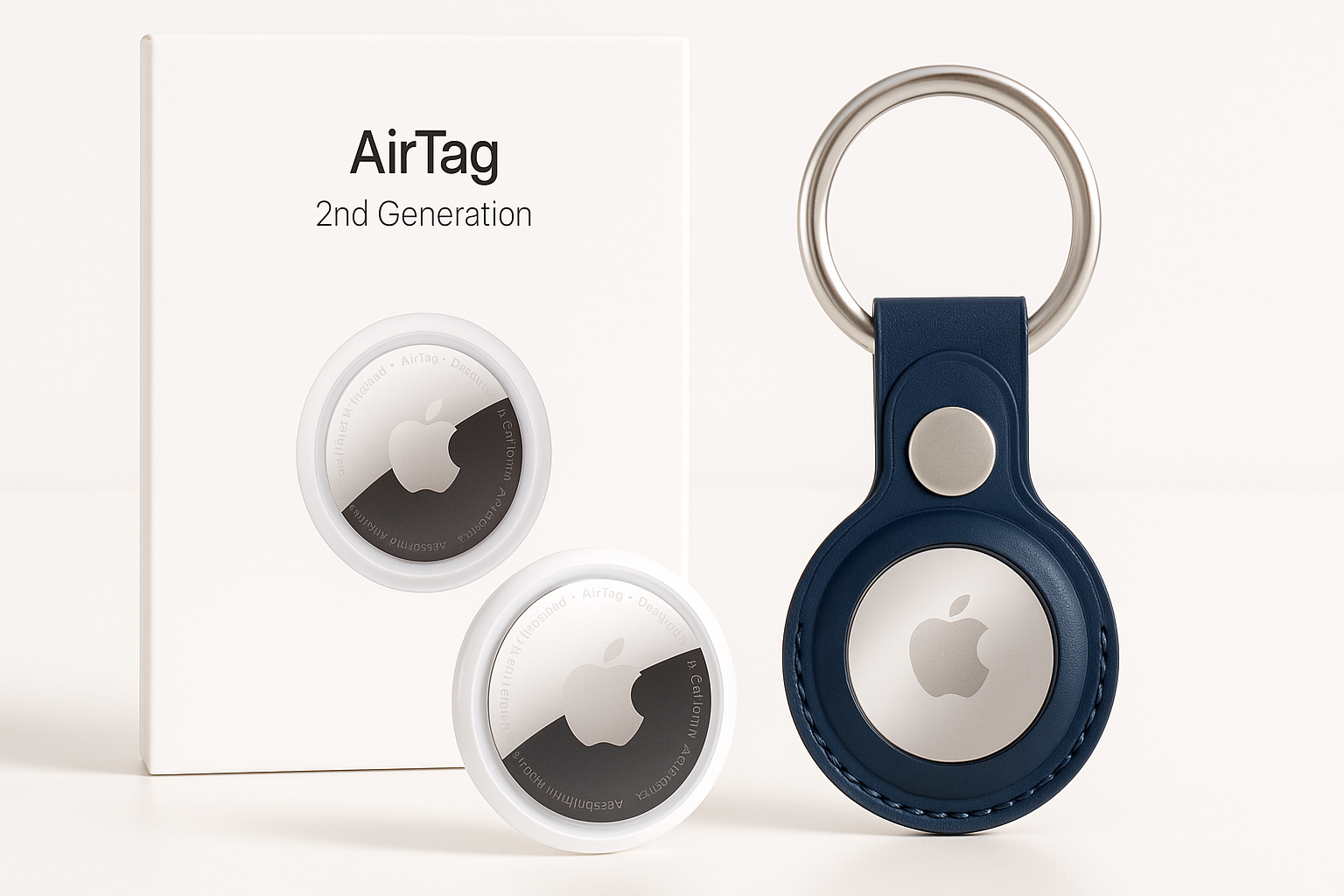
The AirTag (2nd Generation) keeps the familiar compact disc‑like shape, small enough to slip into a wallet pocket (with a thin holder) or attach to a keychain via an accessory loop. Apple continues to prioritize minimalism here—no visible buttons or display, just a clean white-and-metal puck.
The tracker itself does not include an integrated key loop, so you’ll likely want a dedicated holder or keychain accessory if you plan to attach it to keys, bags, or pet collars. This adds to the total cost, but also allows some flexibility in how you mount or conceal the device.
Build quality is solid, with a sturdy shell that feels capable of handling everyday knocks, bag tosses, and pocket carry. The compact size makes it easy to tuck into bags and luggage without taking up meaningful space.
Setup and Everyday Use
Setting up the AirTag (2nd Generation) remains one of its strongest selling points. Bringing it near a compatible iPhone or iPad automatically triggers a prompt, similar to pairing AirPods. You assign a name (e.g., “Keys”, “Wallet”, “Backpack”) and it’s instantly linked to your Apple ID in the Find My app.
From there, daily use is straightforward:
- Open the Find My app on your iPhone or iPad.
- Select the AirTag from your list of items.
- Choose Play Sound to make the built‑in speaker chime if it’s nearby.
- Use Precision Finding (on supported iPhones) to get arrows, distance, and haptic feedback leading you toward the item.
For local misplacements—losing your keys in the couch, or misplacing your bag in the same room—the combination of audible alerts and on‑screen guidance is very effective. The extended Precision Finding range compared with the first generation helps maintain a more stable connection as you move around, particularly in larger homes or offices.
Tracking Beyond Bluetooth Range
Where the AirTag really differentiates itself is beyond direct Bluetooth range. If you leave your keys at a café or your bag on public transport, the AirTag harnesses Apple’s Find My network. Nearby Apple devices (from other users) can detect your AirTag and silently update its approximate location, which you then see in the Find My app.
This crowdsourced approach is powerful in areas with a high density of Apple devices—urban environments, busy campuses, airports, and transit hubs. In more remote or less densely populated areas, updates will be less frequent, but the AirTag still performs comparably to other Bluetooth trackers.
Sound and Alerts
The built‑in speaker is sufficiently loud for indoor environments, making it easy to follow the chime when you’re close by. In noisy outdoor settings, you may need to rely more on Precision Finding and visual cues.
The AirTag can also leverage separation and left‑behind alerts via the Find My app and your iPhone, especially when combined with features like Notify When Left Behind for specific locations (such as leaving home or the office without your keys). These smart notifications help prevent loss before it happens.
Battery and Maintenance
Battery replacement remains straightforward. The AirTag uses a standard coin cell battery, and you can open the back to swap it out when your iPhone notifies you of a low battery. Under typical use, you can expect many months—often close to a year—of life before needing to replace the cell.
Maintenance is otherwise minimal: keep the tracker reasonably clean, occasionally inspect the housing if it’s on a keychain that gets heavily used, and confirm it’s still visible in your Find My app.
Privacy and Safety Features
A notable focus of the 2nd generation AirTag is enhanced privacy and anti‑stalking safeguards. Apple’s tracking ecosystem has been refined with clearer alerts, cross‑platform notifications, and more proactive measures to detect when an AirTag might be used improperly to track a person rather than an item.
For everyday owners using it as intended, these features mostly stay in the background. You benefit from better protection without needing additional configuration, while still enjoying seamless item location.
Pros
- Deep Apple ecosystem integration: Works natively with the Find My app on iPhone and iPad; no extra account or subscription needed.
- Improved Precision Finding: Up to 1.5x the range of the first‑generation AirTag in ideal conditions, offering more responsive guidance.
- Simple one‑tap setup: Intuitive pairing experience nearly identical to AirPods, reducing friction for non‑technical users.
- Global Find My network coverage: Leverages millions of Apple devices for crowdsourced location updates well beyond Bluetooth range.
- Compact, discreet design: Small enough for wallets and easily attachable to keychains and bags with accessories.
- Audible sound alerts: On‑device speaker assists in locating items that are nearby but out of sight.
- User‑replaceable battery: Standard coin cell with long life, avoiding frequent charging routines.
- Enhanced safety and privacy controls: Stronger anti‑stalking measures and clearer notifications compared to earlier implementations.
Cons
- Apple‑only ecosystem: Requires an iPhone or iPad for full functionality; not ideal for Android users.
- Accessory reliance: No built‑in key loop, so you’ll usually need to purchase a keychain or holder separately.
- Dependent on Apple device density: Long‑distance tracking performance hinges on how many Apple devices are nearby your lost item.
- Sound volume limits outdoors: The chime can be hard to hear in very loud or open environments.
- Single‑purpose device: Excellent for tracking items, but not designed for more advanced GPS‑style tracking scenarios like detailed route history.
Verdict
The Apple AirTag (2nd Generation) refines an already strong product by extending Precision Finding range, tightening privacy safeguards, and keeping the same effortless setup that made the original so approachable. If you’re an iPhone or iPad user who frequently misplaces keys, wallets, bags, or luggage, this tracker offers a polished, deeply integrated solution.
While reliance on the Apple ecosystem and the need for accessories are notable drawbacks, the overall experience—from fast pairing to accurate on‑screen directions and powerful Find My network capabilities—makes the AirTag (2nd Generation) one of the most compelling item trackers for Apple users. At around $29.00 for the single‑pack on Amazon, it delivers strong peace of mind at a relatively accessible cost, particularly if you already live in Apple’s world and want a low‑effort way to keep tabs on what matters most.