

DJI Mini 3 Review: A Lightweight 4K Drone That Makes Aerial Shooting Accessible
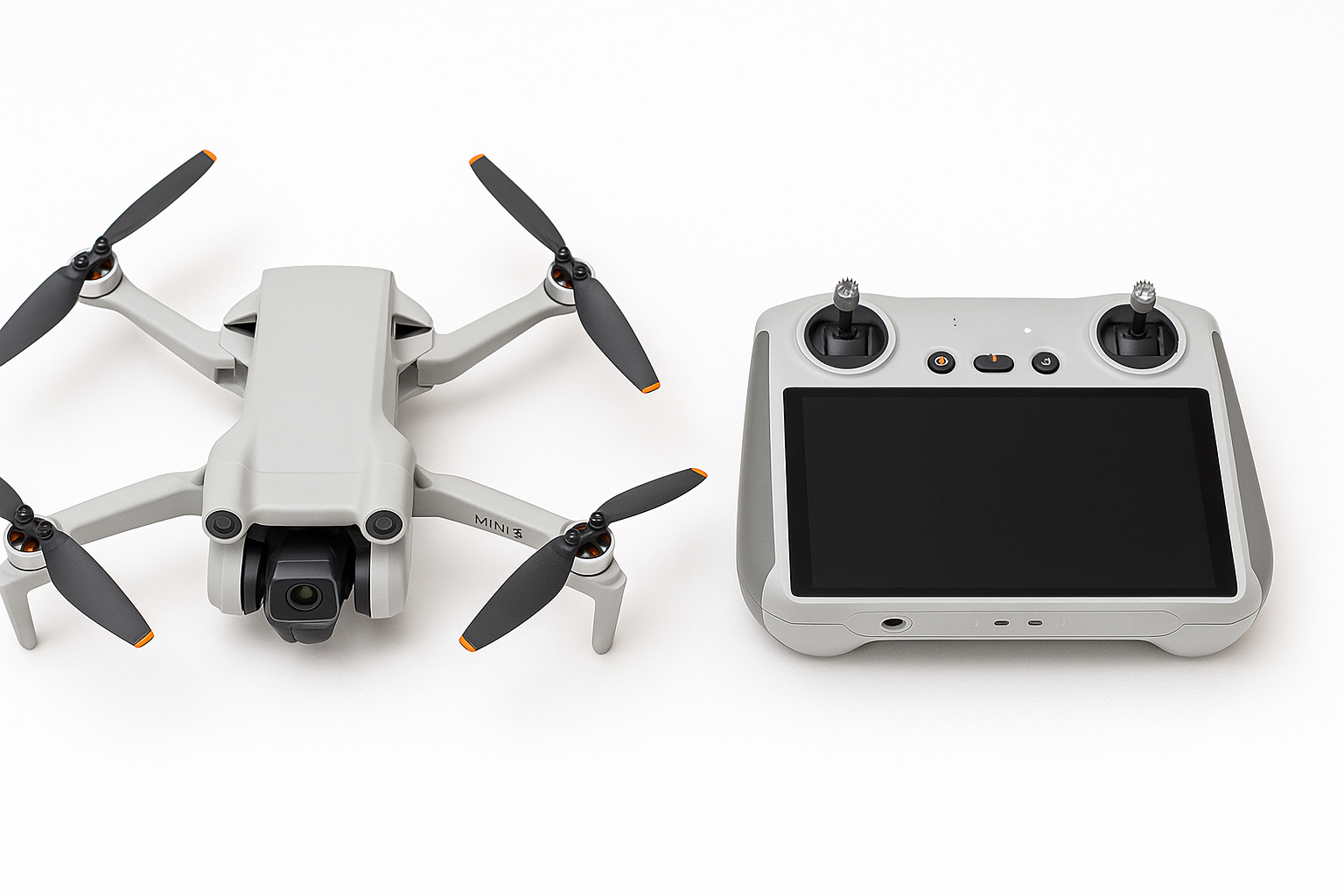
What This Product Is
The DJI Mini 3 is a compact, foldable camera drone that weighs under 249 g, designed primarily for beginners, casual flyers, and content creators who want high-quality aerial footage without the bulk or complexity of larger drones.
Key characteristics include:
- 4K HDR-capable camera with a 1/1.3-inch sensor and 3‑axis mechanical gimbal
- True vertical shooting for smartphone-friendly portrait video and photos
- Up to 38 minutes of advertised flight time with the standard Intelligent Flight Battery【0search3】
- DJI O2 video transmission up to 10 km (FCC) in ideal conditions【0search0】
- GPS-assisted flight, including auto Return to Home (RTH)
- Integrated safety and beginner-friendly features inside the DJI Fly app
The specific configuration at the Amazon link ($299.00) is positioned as an accessible entry point into the DJI ecosystem, offering enough capability for travel vlogging, hobby filmmaking, and social-media content without the premium cost of higher-end models.
Why It Matters
The Mini 3 sits at an important point in DJI’s lineup and in the wider consumer drone market:
- Lower barrier to entry for 4K aerial video
- A few years ago, stable 4K footage from the air required heavier, more expensive drones. The Mini 3 delivers stabilized 4K video, respectable low-light performance for its size, and modern image processing in a package that’s easy to carry and relatively simple to fly.
- Sub-250 g, travel- and regulation-friendly design
- At under 249 g, the Mini 3 falls into the most permissive weight category in many regions, which can simplify registration and operating requirements (though local regulations still apply and must be checked). For travelers, the low weight and folding arms also make it highly packable.
- Focus on vertical content creation
- True vertical shooting—by physically rotating the gimbal—allows you to capture full-resolution portrait footage instead of cropping a horizontal frame. For TikTok, Instagram Reels, YouTube Shorts, and mobile-first platforms, this is a major plus.
- Extended flight time in a small drone
- The advertised 38-minute max flight time with the standard battery is among the better figures in its class, giving beginners more time in the air and reducing battery anxiety on location.
Key Advantages
1. Strong Image Quality for Its Size
- 4K video and high-resolution photos: The 1/1.3-inch sensor and 4K recording unlock detailed aerial imagery that is more than sufficient for social media, travel films, and even many semi-professional uses.
- Stabilized footage: The 3‑axis mechanical gimbal does an excellent job of smoothing out motion, even in moderate winds.
- True vertical shooting: Instead of cropping a landscape image, the Mini 3 rotates its gimbal to capture native portrait footage, preserving full sensor resolution and image quality.
2. Impressive Flight Time for a Mini Drone
- The up to 38-minute stated maximum flight time with the standard Intelligent Flight Battery【0search3】 means longer sessions per battery compared with many older or cheaper mini drones.
- Real-world performance is usually a bit lower than the spec sheet due to wind, aggressive flying, and safety reserves, but even with a safety margin, users commonly report comfortably long flights.
3. Long-Range, Stable Video Transmission
- The Mini 3 uses DJI O2 transmission (OcuSync 2.0), with up to 10 km maximum transmission distance (FCC) in optimal, interference-free conditions.【0search0】
- In practice, range is limited by local regulations, obstacles, and interference, but the link is generally reliable and stable at typical hobbyist distances.
4. Beginner-Friendly Features and Safety Nets
- GPS positioning and hovering help the drone maintain a stable position with minimal pilot input.
- Return to Home (RTH) uses GPS and smart battery monitoring to automatically bring the drone back if the signal is lost or the battery drops too low, reducing the risk of losing it.
- The DJI Fly app presents beginner tutorials, visual flight modes, and straightforward camera controls.
5. Extremely Portable and Discreet
- At under 249 g and with folding arms, the Mini 3 is backpack- and even sling-bag-friendly, making it ideal for hikers, travelers, and urban explorers.
- Its lower profile and quieter operation compared with larger drones can draw less attention in public spaces (within the bounds of local laws and etiquette).
Key Limitations
1. No Advanced Obstacle Avoidance
- Unlike the Mini 3 Pro and some higher-end DJI models, the Mini 3 lacks multi‑directional obstacle sensing. It relies primarily on downward sensors and the pilot’s situational awareness.
- This means automated subject-tracking and complex autonomous flight modes are more limited, and there’s a higher risk of collisions if you fly close to trees, buildings, or other obstacles without care.
2. Less Dynamic Range and Flexibility Than Pro Models
- While the camera is excellent for the size and price class, it does not offer all the advanced color profiles and bitrates found on professional-grade drones.
- If you need maximum flexibility for color grading, high dynamic range in extreme lighting, or broadcast-level codecs, you may outgrow the Mini 3’s capabilities.
3. Real-World Range and Flight Time Are Lower Than Spec
- The 10 km transmission range and 38-minute flight time are best-case figures measured in controlled conditions. In real environments, interference, wind, and temperature will reduce both.
- Pilots in dense urban areas may see significantly shorter usable range due to signal congestion, and heavy wind or aggressive flying will shorten flight time.
4. Accessories and Extra Batteries Add to Total Cost
- While the base drone kit at $299.00 is competitive for what it offers, getting the most from it often means adding extra batteries, ND filters, and possibly a carry case or charging hub.
- These extras can bring the overall investment closer to that of more advanced models, so it’s important to think about your full kit, not just the starter package.
Who It’s For
The DJI Mini 3 is a strong fit for:
- First-time drone pilots who want a forgiving, easy-to-fly model with strong GPS stabilization, RTH, and intuitive controls.
- Travelers and backpackers who prioritize low weight and portability but still want high-quality aerial footage.
- Social-media creators focused on TikTok, Instagram, and Shorts who will benefit from true vertical shooting and stabilized 4K video.
- Real-estate agents and small business owners who need good-looking aerial shots for listings or marketing without investing in a professional rig.
- Hobbyists upgrading from toy or sub‑HD drones who want a big step up in image quality, stability, and flight time.
Who Should Skip It
You may want to consider a different model if you are:
- A professional videographer or commercial drone operator who needs advanced obstacle avoidance, higher bitrates, log profiles, or multi-directional sensors—here, the Mini 3 Pro or larger DJI models will be more appropriate.
- Flying in dense, obstacle-rich environments (e.g., forests, tight urban spaces) where active obstacle sensing and avoidance are critical for safety.
- Focused on long-distance or high-risk flights beyond typical visual line-of-sight, where more robust sensor suites and redundancy might be justified (and where regulations are strict).
- Working on high-end cinematic productions where maximum dynamic range, color depth, and lens options are required.
Final Recommendation
The DJI Mini 3 strikes a compelling balance between portability, capability, and accessibility. Its combination of 4K stabilized video, true vertical shooting, long advertised flight time, and user-friendly controls makes it one of the most approachable ways to start flying and filming with a drone.
If your primary goals are:
- Capturing travel footage, landscapes, and everyday aerial views,
- Producing social-media-friendly vertical content, and
- Having a lightweight, easy-to-carry drone that doesn’t overwhelm you with complexity,
then the Mini 3 at $299.00 is an excellent choice and a strong value in DJI’s lineup.
Power users and professionals who demand advanced obstacle avoidance, more robust color science, or top-tier transmission and sensing features will be better served stepping up to higher-end models. But for most beginners and enthusiasts, the DJI Mini 3 delivers an impressive mix of image quality, flight performance, and portability that’s hard to beat at this level.