

Fitbit Google Air Review: A Screenless Activity Tracker for Focused Health Tracking
The Fitbit Google Air is a screenless activity tracker designed for users who want continuous fitness, heart-rate, sleep, and wellness tracking without the distractions of a smartwatch display. It offers optical heart-rate monitoring, smartphone-connected GPS, water resistance up to 50 meters, personalized AI-powered coaching, and up to seven days of battery life. Its screen-free design may appeal to people seeking a discreet wearable, although reviewing detailed metrics requires using the companion app.
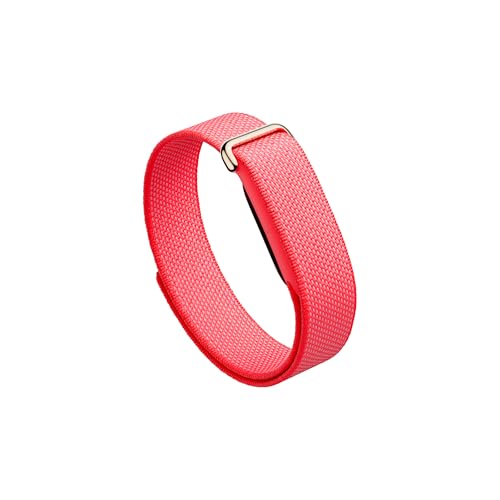
Google Fitbit Air - Screenless Activity Tracker, Berry | Fitness, heart rate, & sleep tracking, personalized AI-powered coaching, up to 7 days’ battery life, works with iOS & Android
SHOP NOW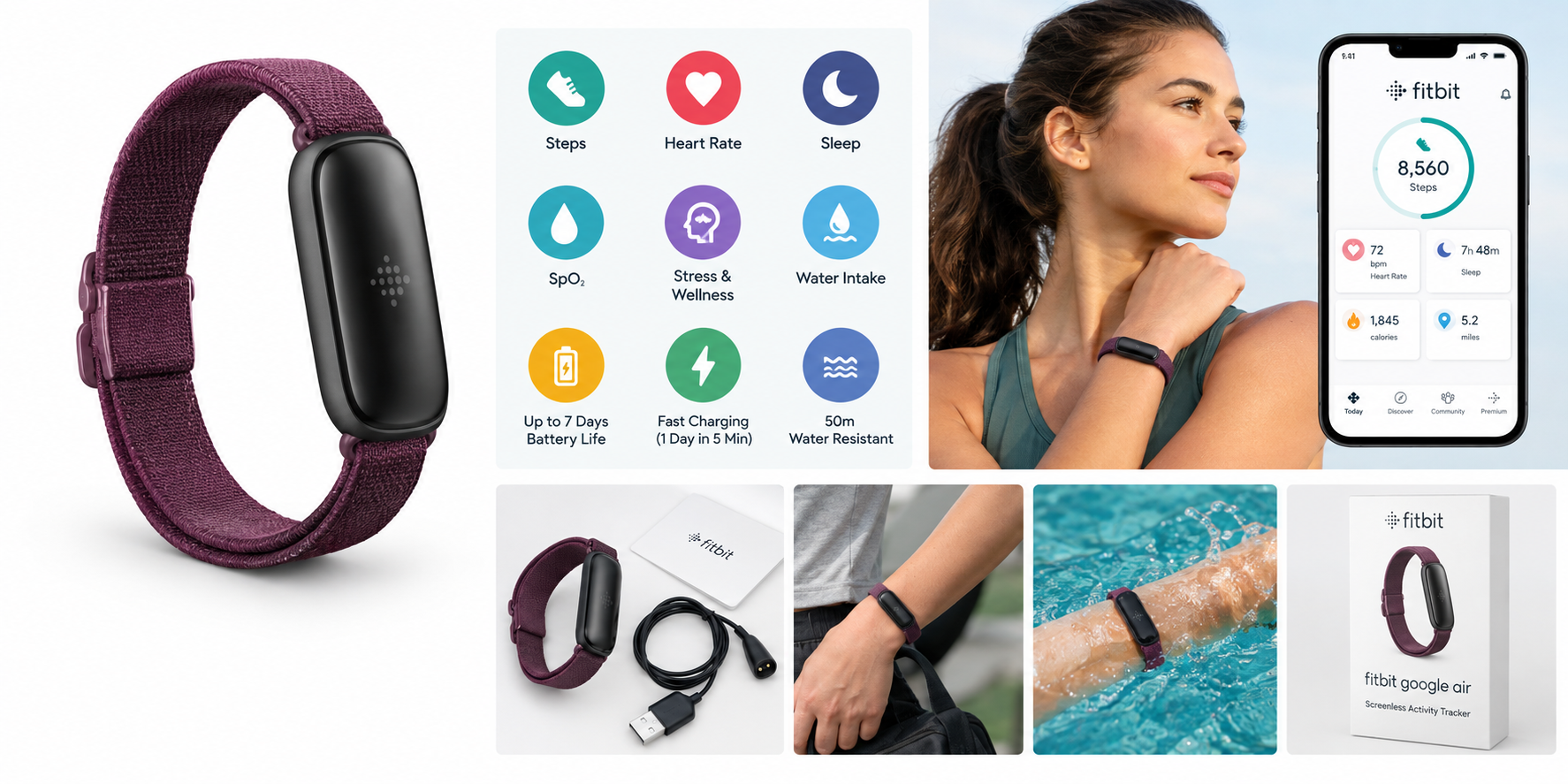
Introduction
The Fitbit Google Air - Screenless Activity Tracker takes a minimalist approach to wearable fitness tracking. Instead of providing a display for notifications, apps, or on-device statistics, it focuses on collecting health and activity data in the background and presenting that information through a connected smartphone app.
The Berry model is designed for users who want step counting, heart-rate tracking, sleep monitoring, and wellness insights without wearing a conventional smartwatch. Its screenless format can reduce distractions and may provide a more discreet alternative for everyday use.
Setup / Getting Started
The Fitbit Google Air includes the tracker, a watch band, and a charging cable. Setup requires pairing the device with a compatible smartphone through the Fitbit ecosystem. The product listing specifies support for Android 11.0 or later and Apple iOS 16.4 or later.
Because the tracker has no screen, most setup tasks and configuration changes take place in the companion app. Users should expect to enable Bluetooth, sign in or create an account, allow health permissions, and customize tracking preferences before using the device regularly.
The lack of a screen simplifies the hardware but makes smartphone access essential. Users who prefer to view workout statistics or daily progress directly from their wrist may find the setup and interaction model less convenient than a display-equipped wearable.
Daily Usage
The Fitbit Google Air is intended to be worn throughout the day and night. It tracks common activity metrics such as steps, calories, distance, heart-rate data, and sleep. The product information also references heart-rate variability, blood oxygen measurements, water intake, and mood-related tracking within the broader Fitbit experience.
The screenless design is the defining feature. There are no on-device menus or visual notifications competing for attention, making the tracker suitable for people who want a less intrusive wearable. At the same time, checking progress requires opening the Fitbit app on a connected phone.
The tracker is water-resistant up to 50 meters, which supports use during swimming, showering, and sweaty workouts when used according to Fitbit's care guidance. Its GPS is provided through a connected smartphone rather than a built-in GPS receiver, so outdoor route tracking depends on carrying a compatible phone.
Performance & Reliability
The listed battery life is up to seven days, with quick charging capable of providing up to one day of battery life in approximately five minutes. Actual endurance will vary depending on usage, sensor activity, syncing frequency, and other settings, but the claimed runtime should reduce the need for frequent charging compared with many full-featured smartwatches.
Optical heart-rate monitoring supports continuous wellness tracking and exercise-related measurements. As with other wrist-worn optical sensors, readings can be affected by fit, movement, skin contact, and activity type. The tracker should therefore be viewed as a wellness and fitness device rather than a medical diagnostic instrument.
Reliability also depends on the Fitbit app and smartphone connection. The device can collect data without a screen, but the connected software is central to reviewing trends, receiving coaching, and interpreting measurements. Users who prefer a self-contained wearable may find this dependency limiting.
What Works Well
- Distraction-free design: The screenless format avoids constant notifications and encourages users to check data intentionally.
- Broad wellness tracking: The tracker is designed to cover activity, heart rate, sleep, and additional wellness metrics.
- Long battery target: Up to seven days of battery life is practical for continuous tracking, particularly overnight.
- Fast top-ups: Quick charging can help restore useful battery life when the device needs to be worn again soon.
- Water resistance: Protection up to 50 meters makes it suitable for a range of everyday and fitness situations.
- Cross-platform support: Compatibility with newer Android and iPhone software broadens its usefulness across mobile ecosystems.
- Lightweight concept: A screenless tracker can be less visually bulky and less distracting than a traditional smartwatch.
What Could Be Improved
- No on-device feedback: Users cannot view steps, heart rate, workout progress, or sleep summaries directly from the tracker.
- Smartphone dependence: Detailed insights, configuration, and GPS-based route tracking require a compatible phone and app connection.
- Limited standalone workout use: People who exercise without carrying a phone may miss features commonly found on trackers with built-in GPS or displays.
- Potential learning curve: Screenless interaction may take time to understand because status information is not immediately visible on the device.
- Sensor limitations: Wrist-based health measurements can vary with fit and activity, so results should be interpreted as general wellness information.
- Feature availability may vary: Some coaching and advanced insight features may depend on the Fitbit app, account configuration, or supported services.
Overall Impression
The Fitbit Google Air is best suited to users who want continuous health and activity tracking without the distraction of a screen. Its combination of heart-rate monitoring, sleep tracking, water resistance, smartphone-connected GPS, AI-powered coaching, and a claimed battery life of up to seven days gives it a focused and practical feature set.
Its main compromise is the absence of on-device information. This makes the tracker calmer and more discreet, but it also means that nearly all meaningful interaction happens through a smartphone. For users comfortable with that arrangement, the Fitbit Google Air offers a streamlined alternative to a conventional smartwatch. Those who want instant workout statistics, notifications, or standalone GPS should consider whether the screenless design matches their daily habits.